
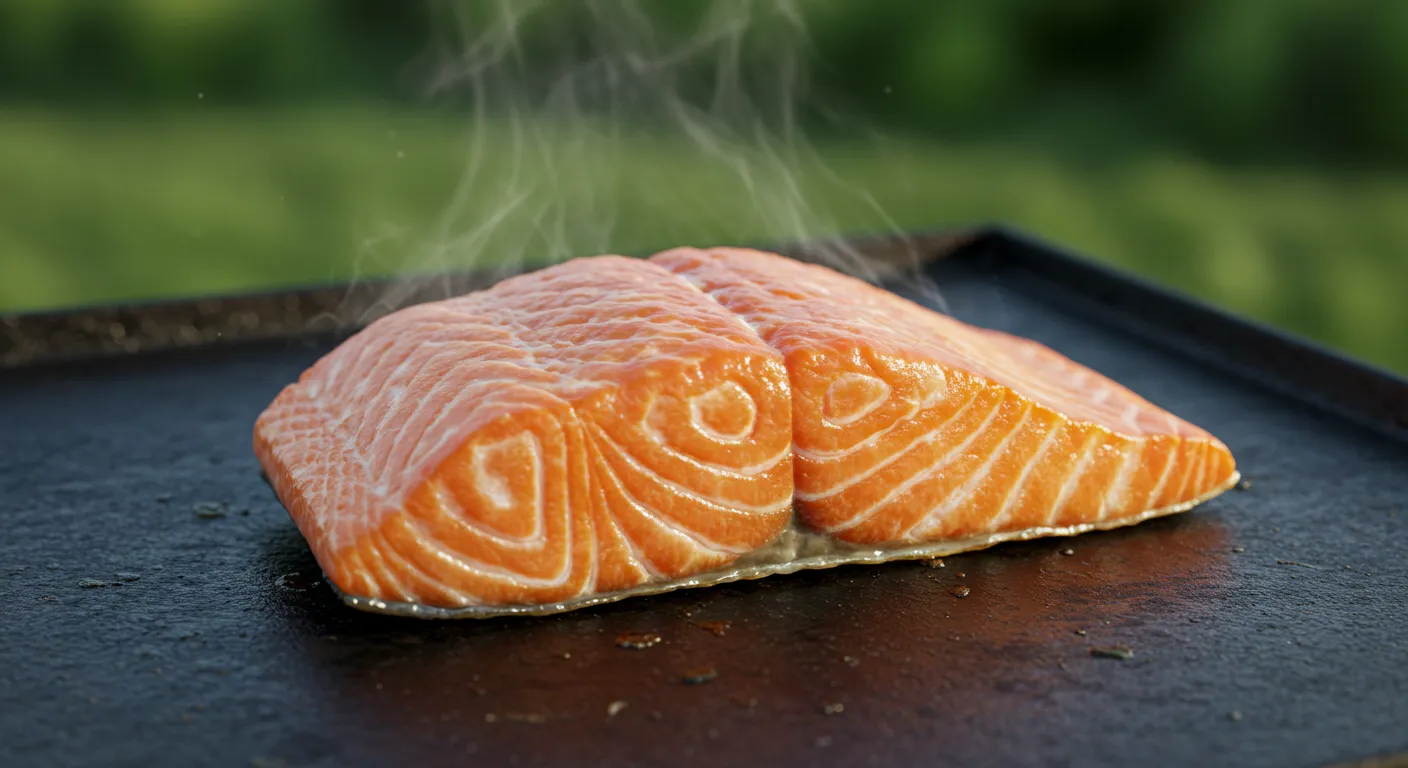
Salmon on the Blackstone Griddle: Easy Step-by-Step Recipe
Salmon on the Blackstone griddle is one of the best things you can cook on a flat-top. The wide, even surface gets hot enough to char the flesh and render the skin crispy — something a skillet rarely pulls off without smoking up your kitchen. You can cook four fillets and a full side dish at the same time, and cleanup is a single pass with the scraper.
This guide covers everything: how to pick the right fish, the ideal griddle temperature, a seasoning blend built for salmon, step-by-step cook instructions, and a quick-reference FAQ. If you’ve been wondering exactly how long to cook salmon on a griddle or what temp to run your Blackstone, those answers are here.
Why the Blackstone Is Perfect for Salmon
The flat-top does a few things for salmon that other cooking methods can’t easily match:
- Even heat across the whole fillet. No hot spot in the center, no raw edges. The rolled steel surface conducts heat uniformly from end to end.
- A real sear. Contact cooking at 375–400°F triggers the Maillard reaction on the cut face of the fillet, building a golden crust with concentrated flavor.
- Room to cook everything at once. Throw your asparagus, lemon halves, and salmon on together — dinner is done in one shot.
- Outdoor cooking means no fishy kitchen. The smell stays outside where it belongs.
Choosing Salmon for the Griddle
Not all salmon behaves the same at high heat. Here’s what works best on a Blackstone:
Best Cuts for Griddle Cooking
Center-cut fillets (1 to 1.25 inches thick) are the gold standard. They cook evenly, hold together when flipped, and give you a consistent cook time. Tail pieces are thinner and overcook fast — avoid them unless you’re watching carefully.
Skin-on fillets are strongly preferred. The skin acts as a natural insulator on the second side and crisps up beautifully against hot steel.
Salmon Varieties Ranked for the Blackstone
| Variety | Fat Content | Flavor | Best For |
|---|---|---|---|
| King (Chinook) | Very high | Rich, buttery | Best overall — handles high heat without drying |
| Sockeye | Medium | Bold, intense | Great sear; pull at 130°F internal to keep it moist |
| Coho (Silver) | Medium | Mild, clean | Versatile, forgiving for beginners |
| Atlantic (farmed) | High | Mild, fatty | Most widely available; very hard to overcook |
What to Look for at the Counter
- Flesh should be vibrant — deep orange-red for sockeye, pale coral for Atlantic
- Press with your finger: it should spring back, not leave a dent
- Smell should be clean and oceanic, not “fishy”
- Uniform thickness from one end to the other
Ingredients for Blackstone Salmon
Serves 4 · Prep: 5 min · Cook: 12 min
The Salmon
- 4 salmon fillets (5–6 oz each, skin-on, center-cut)
The Seasoning Blend
- 2 tsp kosher salt
- 1 tsp black pepper
- ½ tsp smoked paprika
- ½ tsp chili powder
- ¼ tsp cumin
- ¼ tsp dried dill weed
- ⅛ tsp ground cinnamon
- ⅛ tsp onion powder
- Pinch of cayenne pepper
The cinnamon is a small addition that reads as warmth and depth, not sweetness — don’t skip it.
For Cooking & Finishing
- 1 tbsp avocado oil (or other high-smoke-point oil)
- 3 tbsp unsalted butter
- 1–2 cloves fresh garlic, thinly sliced
- Juice of 1 lemon
- Lemon wedges for serving
Tools You’ll Need
- Fish spatula (thin, flexible blade — essential for a clean flip)
- Instant-read thermometer
- Squeeze bottle or spoon for butter sauce
- Paper towels + tongs for oiling the surface
- Basting brush (optional)
How to Cook Salmon on the Blackstone Griddle
Step 1: Season the Salmon
Pat each fillet completely dry with paper towels. Moisture is the enemy of a good sear — any surface water will steam the fish instead of searing it.
Mix all the seasoning blend ingredients together. Coat both sides of each fillet generously, pressing the spices gently into the flesh.
Let the seasoned fillets rest at room temperature for 10–15 minutes while the griddle preheats. Cold fish hitting a hot griddle cooks unevenly.
Step 2: Preheat the Blackstone to the Right Temperature
Set your Blackstone to medium-high heat and let it preheat for 10–15 minutes. You’re targeting a surface temperature of 375–400°F.
To test without a thermometer: a drop of water should immediately ball up and dance across the surface (the Leidenfrost effect). If it evaporates instantly, the griddle is too hot. If it spreads and sits, it’s not ready yet.
Once hot, add avocado oil and spread it across the cooking zone with a folded paper towel held in tongs.
Step 3: Cook Flesh-Side Down First
Place the fillets flesh-side down. This is the opposite of what most guides tell you, and it’s the right call: the seasoned flesh face builds the best crust and the visual char that makes the finished plate look great. The skin side finishes second and crisps from the residual heat of the steel.
Do not move the fillets for 6–8 minutes. Let the crust develop and release naturally. If you try to flip early and the fish resists, wait another 30–60 seconds — it will release when it’s ready.
Step 4: Flip and Finish with Garlic Butter
Slide your fish spatula under each fillet and flip to skin-side down.
Immediately add the butter to the griddle near the fillets. Once it melts and foams, add the sliced garlic and let it sizzle for 30 seconds. Squeeze lemon juice over the fish and baste each fillet with the butter mixture.
Cover loosely with a dome or foil tent and cook for another 3–5 minutes, until the internal temperature reaches 125–130°F for medium or 145°F for fully cooked per USDA guidelines.
Remove from the griddle and rest for 2 minutes before serving.
How Long to Cook Salmon on the Blackstone Griddle
Cook time depends on fillet thickness. Use these as starting targets and confirm with a thermometer:
| Fillet Thickness | Flesh Side Down | Skin Side Down | Total Time |
|---|---|---|---|
| ¾ inch | 4–5 min | 2–3 min | 6–8 min |
| 1 inch | 6–7 min | 3–4 min | 9–11 min |
| 1.25 inches | 7–8 min | 4–5 min | 11–13 min |
The only reliable way to know salmon is done is a thermometer. Color and texture are useful signals, but thickness varies too much to cook by time alone.
Blackstone Salmon Temperature Guide
| Doneness | Internal Temp | Texture |
|---|---|---|
| Medium-rare | 110–120°F | Very translucent center, silky |
| Medium | 125–130°F | Slightly translucent, moist and flaky |
| Medium-well | 135–140°F | Opaque, firm but still juicy |
| Well done (USDA) | 145°F | Fully opaque, flakes easily |
Most experienced griddle cooks pull salmon at 125–130°F. The residual heat from resting will carry it to 130–135°F on the plate.
Tips for Perfect Salmon on a Griddle Every Time
- Dry the fish thoroughly. A wet surface steams instead of sears. Pat dry, then let the fillets air for a minute before seasoning.
- Don’t crowd the griddle. Leave at least an inch between fillets to maintain surface temperature.
- Resist the flip. The fillet will stick if you try too early. When it releases cleanly, it’s ready.
- Use a fish spatula, not a regular spatula. The thin, flexible blade slides under without tearing the crust.
- Baste at the end, not the beginning. Adding butter too early causes flare-ups and burns the sugars in the seasoning.
- Rest before serving. Two minutes lets the juices redistribute. Skip this and they run straight onto the plate.
- A dome speeds things up. Tent the fillets on the second side to trap heat and cut 1–2 minutes off cook time.
What to Serve with Salmon on the Blackstone
The Blackstone gives you room to cook sides simultaneously. These all work at the same heat range as the salmon:
- Grilled lemon halves — cut-side down for 3–4 minutes, serve alongside for squeezing
- Asparagus — toss with oil and salt, roll on the griddle for 4–5 minutes
- Zucchini rounds — oil, salt, pepper; 2–3 minutes per side
- Corn on the cob — pre-cook in the microwave, then roll on the griddle to char
- Fried rice — cook this first while the griddle is at peak temp, push to a warm zone while the salmon cooks
- Cherry tomatoes — blistered in 5–7 minutes in the corner of the griddle
Frequently Asked Questions
Should I cook salmon on the Blackstone skin-side down first?
No — start flesh-side down. Cooking the seasoned flesh face first builds the best crust and visual char. The skin side goes second and crisps from the residual heat of the steel. If you’re not eating the skin, this is doubly true: why spend your prime searing time on the side you’re discarding?
What temperature should my Blackstone be for salmon?
Set your Blackstone to medium-high heat and aim for a surface temperature of 375–400°F. This range gives you a proper sear without burning the exterior before the interior cooks through. If you go much hotter, the outside chars before the center reaches temperature.
How long do you cook salmon on a griddle?
For a standard 1-inch center-cut fillet: 6–8 minutes flesh-side down, then 3–5 minutes skin-side down — 9–13 minutes total. Thinner fillets cook faster; use a thermometer to hit 125–145°F depending on your preferred doneness.
What internal temperature should salmon reach on the Blackstone?
The USDA recommends 145°F for food safety. Most cooks prefer 125–130°F (medium), which is still safe for high-quality, sushi-grade fish and gives you a moist, silky center. Pull it 5°F early — carryover cooking will do the rest.
How do I know when salmon is done without a thermometer?
The flesh turns from translucent to opaque as it cooks. A fully cooked fillet (145°F) is completely opaque throughout and flakes easily with a fork. At medium doneness (125–130°F), the very center will still look slightly translucent. The white albumin (the milky protein that oozes out) is also a signal: the more you see, the closer to done.
Why is my salmon sticking to the Blackstone?
Three most common causes: (1) the griddle wasn’t hot enough before you added the fish, (2) you didn’t oil the surface right before adding the fillets, or (3) you tried to flip too early. Wait until the fillet releases on its own — it will tell you when it’s ready.
Can I cook frozen salmon on the Blackstone?
Technically yes, but thaw it first for best results. Frozen salmon goes straight from the freezer to the griddle unevenly: the outside overcooks while the interior is still defrosting. Thaw overnight in the refrigerator, pat very dry (frozen fish releases more water), and cook normally.
Can I use a marinade on Blackstone salmon?
Yes — but keep it short. 15–30 minutes in an acidic marinade (lemon, citrus, vinegar) is plenty. Longer than that and the acid starts to denature the proteins, giving you a mushy texture. Always pat dry before putting the fish on the griddle.
Do I need to remove the skin before cooking salmon on the griddle?
No. Leave the skin on. It holds the fillet together during the flip, acts as a buffer against the hot surface on the second side, and crisps up into something worth eating. If you don’t want to eat the skin, it peels off cleanly after cooking.
What’s the best oil for cooking salmon on a Blackstone?
Use a high-smoke-point oil: avocado oil (520°F), refined coconut oil (450°F), or grapeseed oil (420°F). Avoid olive oil at griddle temperatures — it smokes and turns bitter well below the searing range. A light coat directly on the griddle surface is all you need; the salmon itself has plenty of fat.
How to Clean an Electric Griddle: The Ultimate Step-by-Step Guide
Electric griddles are versatile cooking appliances that have become increasingly popular in modern kitchens. However, maintaining these devices can be…
The Ultimate Blackstone Hibachi Recipe: Master Japanese Steakhouse Flavors at Home
Are you yearning for the sizzling excitement and mouthwatering flavors of a Japanese steakhouse without the hefty price tag? Look no further! Our comprehensive…
Meal Prep on a Blackstone Griddle: 6 Healthy Recipes & Tips
Last Updated: March 17, 2025 | By Justin, Griddle Enthusiast Meal prepping just got a whole lot tastier—and easier—thanks to your Blackstone griddle! This…