
How to Clean a Blackstone Griddle: The Complete Guide
Cleaning a Blackstone griddle the right way takes five minutes after most cooks. Done consistently, those five minutes prevent the buildup that turns into a 45-minute deep clean — and the neglect that leads to rust. This guide covers the full picture: the quick after-cook routine, when and how to deep clean, rust removal by severity, troubleshooting sticky or damaged surfaces, and proper storage.
Tools You’ll Need
Keep these within reach of your griddle:
| Tool | What It’s For |
|---|---|
| Metal scraper | Primary debris removal — the most-used tool |
| Squirt bottle with water | Controlled steam cleaning; never flood the surface |
| Paper towels | Wiping, drying, applying oil |
| High smoke point oil | Protective coating after every clean (avocado, canola, grapeseed) |
| Griddle stone / pumice brick | Deep cleaning without chemicals |
| Steel wool (coarse) | Heavy rust removal only — requires re-seasoning after |
| White vinegar | Stubborn rust (5-minute max contact time) |
| Heat-resistant gloves | Safety on warm surfaces |
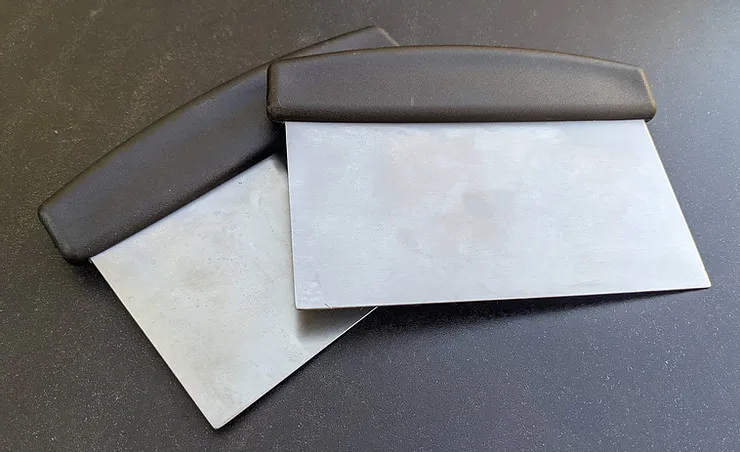
A good scraper is the most important tool on this list. See our best griddle scraper picks if yours isn’t cutting it.
After Every Cook: The 5-Minute Routine
Do this every time you cook. It’s what keeps the griddle in shape and makes deep cleaning rare.
1. Scrape While the Surface Is Still Warm
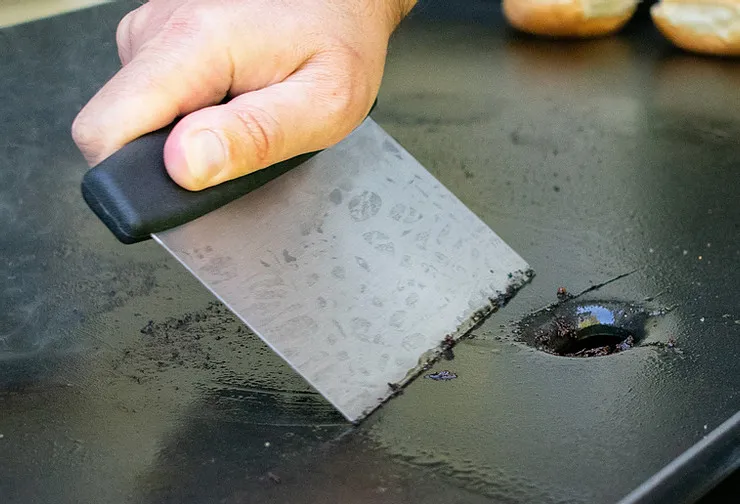
Turn off the burners as soon as you finish cooking. While the surface is still warm — not scorching hot — use your metal scraper to push all food debris toward the grease trap. Work in overlapping motions from the back forward.
Don’t wait until the griddle is cold. Residue bonds tightly to cold steel and becomes much harder to remove.
2. Hit Stubborn Spots With Water
Squirt a small amount of warm water onto any stuck-on bits. It will steam immediately on the warm surface, lifting the residue. Scrape again. Repeat until the surface is clear.
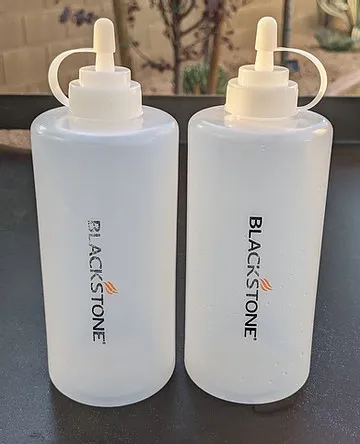
Never pour cold water on a hot griddle. The thermal shock can warp the steel permanently. Use warm or room-temperature water only.
3. Wipe Down Completely
Use paper towels to wipe the entire surface — don’t leave moisture sitting. Any water left on the steel invites rust, especially overnight.
4. Apply a Thin Protective Oil Coat
While the griddle is still warm, add about two tablespoons of oil and spread it in a thin, even layer across the entire surface, including the edges and corners. The surface should look barely damp, not wet.
This replenishes the seasoning and seals the steel against moisture until your next cook. It’s the single most important rust-prevention step.
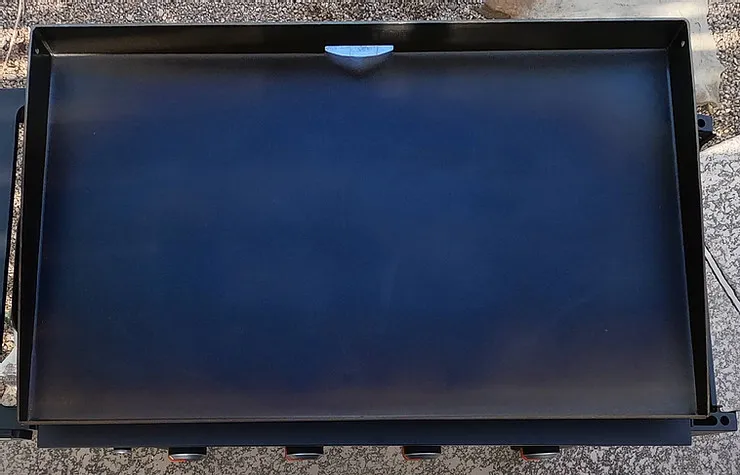
A well-maintained surface after cleaning looks dark and slightly shiny. If yours looks dull or patchy, it may need a re-seasoning pass.
Deep Cleaning: When and How
The after-cook routine handles 90% of maintenance. Deep cleaning is for when buildup has accumulated despite regular care.
When to Deep Clean
- Carbon buildup isn’t coming off with normal scraping
- Grease has hardened in patches
- Rust spots are starting to form
- Food is sticking more than usual
- The surface smells rancid when heated
Plan on deep cleaning every 6–8 weeks with regular use, or any time the above signs appear.
Deep Cleaning Steps
- Preheat to medium (350–375°F) to soften buildup.
- Scrape aggressively — push everything toward the grease trap.
- Apply a small amount of oil to the surface.
- Work a griddle stone in circular motions across the surface. The stone removes carbon and residue without damaging the steel. Don’t use it dry — keep the surface lightly oiled as you go.
- Scrape and wipe away loosened debris.
- Re-season: apply 3–4 thin coats of oil, heating between each coat until smoking stops. See our full seasoning guide for step-by-step instructions.
On soap: dish soap is appropriate for deep cleaning (followed immediately by re-seasoning), but not for routine after-cook cleaning. Soap strips the seasoning layer — if used without re-seasoning after, you’ll have a bare steel surface that rusts quickly.
Rust Removal
Rust on a Blackstone isn’t a death sentence — it’s a surface problem. Even heavily rusted griddles can be restored. See our dedicated rust removal guide for the full process. Here’s the quick breakdown by severity:
Light Rust (Surface Spots)
- Heat the griddle for 20 minutes to expand the steel and loosen rust.
- Scrape off loose rust with the metal scraper.
- Apply oil and work a griddle stone over the rust spots in circular motions.
- Wipe clean and re-season with 3–4 coats.
Heavy Rust (Widespread or Deep)
- Spray white vinegar over the affected areas.
- Let it sit no more than 5 minutes — longer contact etches the steel.
- Scrub aggressively with coarse steel wool.
- Rinse with warm water and dry immediately.
- Re-season with 4–5 coats before cooking again.
Troubleshooting Common Problems
Surface is sticky after cleaning Too much oil applied, or oil that didn’t fully polymerize. Heat the griddle to medium, scrape off the sticky layer, wipe clean, and re-apply a much thinner coat.
Food keeps sticking despite regular cleaning Either the seasoning has been stripped (usually from soap use or heavy scrubbing without re-seasoning) or you’re cooking at too low a temperature. Re-season with 3–4 coats and check our temperature guide for the right heat for what you’re cooking.
Surface smells rancid when heated The oil coating went rancid from sitting too long between cooks. Deep clean the surface, removing the old oil, and re-season fresh.
Seasoning is peeling or flaking Oil was applied too thick during a past seasoning session. Scrape off the flaking areas, clean thoroughly, and re-season using very thin coats.
Storage and Long-Term Care
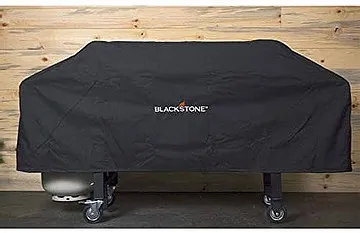
- Always cover the griddle when not in use. A fitted hard cover provides better protection than a soft cloth cover, especially in humid climates.
- Apply a generous oil coat before covering for any extended storage period.
- Store in a garage or shed if possible — even a covered outdoor griddle is exposed to humidity fluctuations that promote rust.
- Check monthly if the griddle sits unused for more than a few weeks. Touch up the oil coat as needed.
- Regular use is the best maintenance. A griddle that gets cooked on weekly stays better seasoned than one that sits for months.
Frequently Asked Questions
Can I use soap to clean my Blackstone griddle? Only for deep cleaning — not routine after-cook cleaning. Soap strips the seasoning layer. If you do use soap for a deep clean, re-season immediately after with 3–4 coats of oil before cooking again.
Can I use a pressure washer on my Blackstone griddle? No. High-pressure water blasts away the seasoning layer and forces water into seams and under components, promoting rust. Stick to a squirt bottle and paper towels.
How do I clean a Blackstone griddle for the first time? Wash the surface with warm soapy water to remove the factory protective coating, rinse, dry completely, then season with 3–4 coats of oil. This is the only time the initial cleaning calls for soap.
How often should I deep clean my Blackstone? Every 6–8 weeks with regular use, or any time you notice significant buildup, rust spots, or persistent sticking that the after-cook routine isn’t fixing.
Why does my Blackstone griddle keep rusting? The most common cause is skipping the oil coat after cleaning. Without a protective layer, bare steel rusts overnight — especially in humid climates. Always finish with oil. A fitted cover adds a second layer of protection.
What oil should I use for cleaning and seasoning? Avocado oil, canola oil, and grapeseed oil are all good choices with high smoke points. Blackstone’s own Seasoning & Cast Iron Conditioner is purpose-built for this. Avoid olive oil — it has a lower smoke point and can go rancid faster between cooks.
Is a dark griddle surface normal? Yes — a properly seasoned griddle is dark brown to black. This is polymerized oil bonded to the steel, not dirt or damage. If the surface is dark and slightly shiny after cleaning, it’s in good shape.
How to Clean an Electric Griddle: The Ultimate Step-by-Step Guide
Electric griddles are versatile cooking appliances that have become increasingly popular in modern kitchens. However, maintaining these devices can be…
Salmon on the Blackstone Griddle: Easy Step-by-Step Recipe
Learn how to cook salmon on the Blackstone griddle with perfect temps, cook times, and a 3-step recipe that delivers crispy, flaky results every time.
The Ultimate Blackstone Hibachi Recipe: Master Japanese Steakhouse Flavors at Home
Are you yearning for the sizzling excitement and mouthwatering flavors of a Japanese steakhouse without the hefty price tag? Look no further! Our comprehensive…